If It Got the Chance to Do the Same Thing Again and if It Thought It Could Escape the Consequences
Looking at problems the CBT style
Not knowing why nosotros feel the manner we do can itself lead to feelings of helplessness and hopelessness. A classical medical approach to problems (including emotional ones) is to assess for symptoms, see if they match a recognised disorder and, if they do, prescribe the treatment for that problem. Having a proper noun for what they are struggling with is enough for some people, but others want to empathise more about why they are stuck.
One of the most helpful things well-nigh the CBT approach is the way that it breaks our problems downward to make them understandable. This is smashing because:
- knowledge is power;
- agreement is one-half the battle;
- sometimes just knowing what is causing a problem can take the fear away.
If we can empathize what is keeping a trouble going then nosotros are more able to do something about it. The way CBT works is a flake like a firefighter taking the fourth dimension to understand what is fuelling a fire earlier deciding where to straight their efforts. Or a mechanic confronted with a misfiring car – her understanding of how cars piece of work means that she pays attention to the engine rather than the wheels.
In this affiliate we are going to acquire some CBT means of understanding problems.
How exercise we understand a trouble with CBT?
Therapists who use CBT are trained to pay attention to problems in a certain mode. If we want to sympathise how the CBT approach works we need to learn how to arroyo a problem.
Focus on specific events that happened recently
Therapists who use CBT often begin by paying attention to specific events that have happened relatively recently. This ways that they attempt to identify problems like "Yesterday when I saw someone who looked like my assaulter I was frozen to the spot with terror" rather than "I'm just e'er feeling then depression that I'g not sure information technology'southward worth information technology anymore". Sometimes it takes a little practice to excerpt specifics from examples similar the latter: when the therapist asked for some more details she was told "When I watched a programme last dark on tv about friendships and realised I didn't have anyone close anymore I felt and so sad that I wondered what the bespeak was in my existing".
The reason that CBT focuses on specific events is because our lives are made up of specific moments all chained together. We live our lives moment past moment, and feel our feelings that mode too. We might tell ourselves stories like "I had the near wearisome solar day always" only chances are that your day was made upward of some boring moments, and perchance some mildly interesting ones too. If nosotros want to pay attention to our thoughts and behaviours these happen moment-past-moment and nosotros will miss important parts if we gloss over the details.
The reason that CBT focuses on things that are problems now is considering problems that happened in the past may no longer bother you. Even if terrible things did happen in the past our suffering – what we want to relieve – happens in the nowadays. 1 of the assumptions that CBT makes is that things happening in the here-and-now (perhaps thoughts, perhaps action) are contributing to that suffering. A final advantage of working on current material is that our memory for it is often better, which means that nosotros can explore it in more particular.
Interruption moments down into helpful components
Once we have identified a specific and relatively recent result, the adjacent job is to break information technology down into manageable parts. These might include:
- Triggers: What was happening just before the problem occurred?
- Situation: Who was in that location? What happened? When did this happen? Where did you experience the problem? (Who? What? When? Where?)
- Cognitions: What went through your mind at the fourth dimension? (This might include thoughts, behavior, interpretations, predictions, assumptions, memories, images, or a combination of these)
- Emotions: What did you experience? (Emotions can typically be described in i give-and-take: happy, sad, helpless, angry)
- Body sensations: What feelings did you notice in your body?
- Actions or responses: How did you reply? What did y'all do to cope? (This might include overt acts like continuing up for yourself, or covert acts like distracting yourself in your heed)
- Context: Nosotros need to hold in listen the context in which an effect is happening. For example, if David is having worries about his health then it is relevant and useful to know that he has suffered three bereavements in the by year.
Relationships and consequences
The next stride is to expect for relationships between the components. This is helpful for working out what happened and in what order. As a general dominion:
Anything we notice tin trigger our thoughts
Common triggers for our thoughts include events, things around usa (sights, sounds, smells), trunk sensations, other thoughts, or memories. Nosotros can also think about anything, so anything can be a trigger for our thoughts.
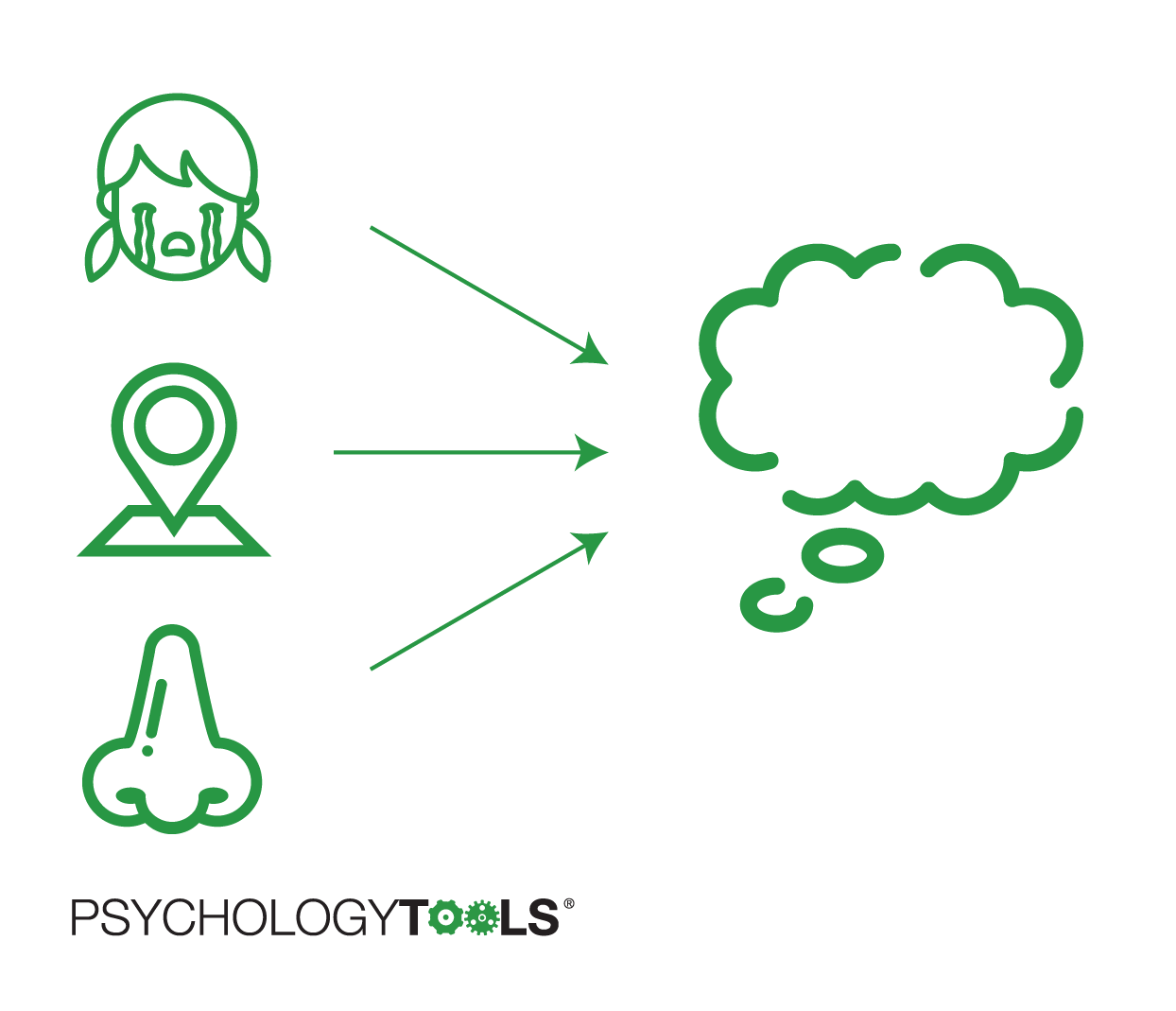
Effigy 4.i: Anything we observe can trigger our thoughts.
Thoughts lead to feelings
As we explored in the previous chapter, the way that we interpret situations affects how we feel about them. These interpretations tin can happen quickly and automati- cally. Retrieve, though, that our automatic thoughts are not always accurate.
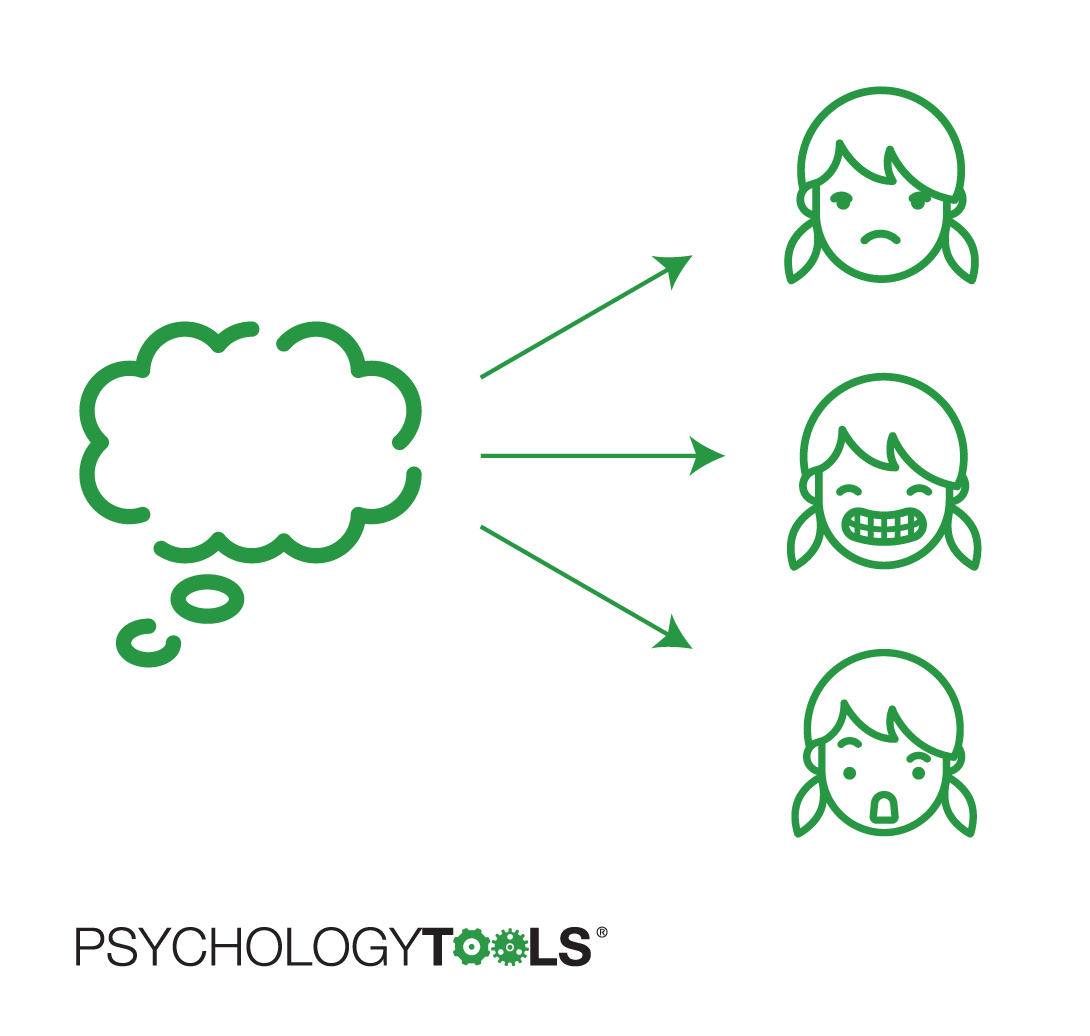
Figure 4.two: Thoughts atomic number 82 to feelings.
Deportment atomic number 82 to consequences
The physicist Isaac Newton's tertiary law of move states that "Every activeness has an equal and opposite reaction". Our actions are similar – everything that we do has a consequence. Some consequences are intended, but others are non.
A common step in CBT is to ask the question "What were the consequences of interim that manner?". You might have escaped a frightening situation with the (intended) upshot that you lot felt safer. But perhaps some unintended consequences were that you learned that it feels skillful to escape, and escaping became your 'become to' strategy for handling catchy situations.
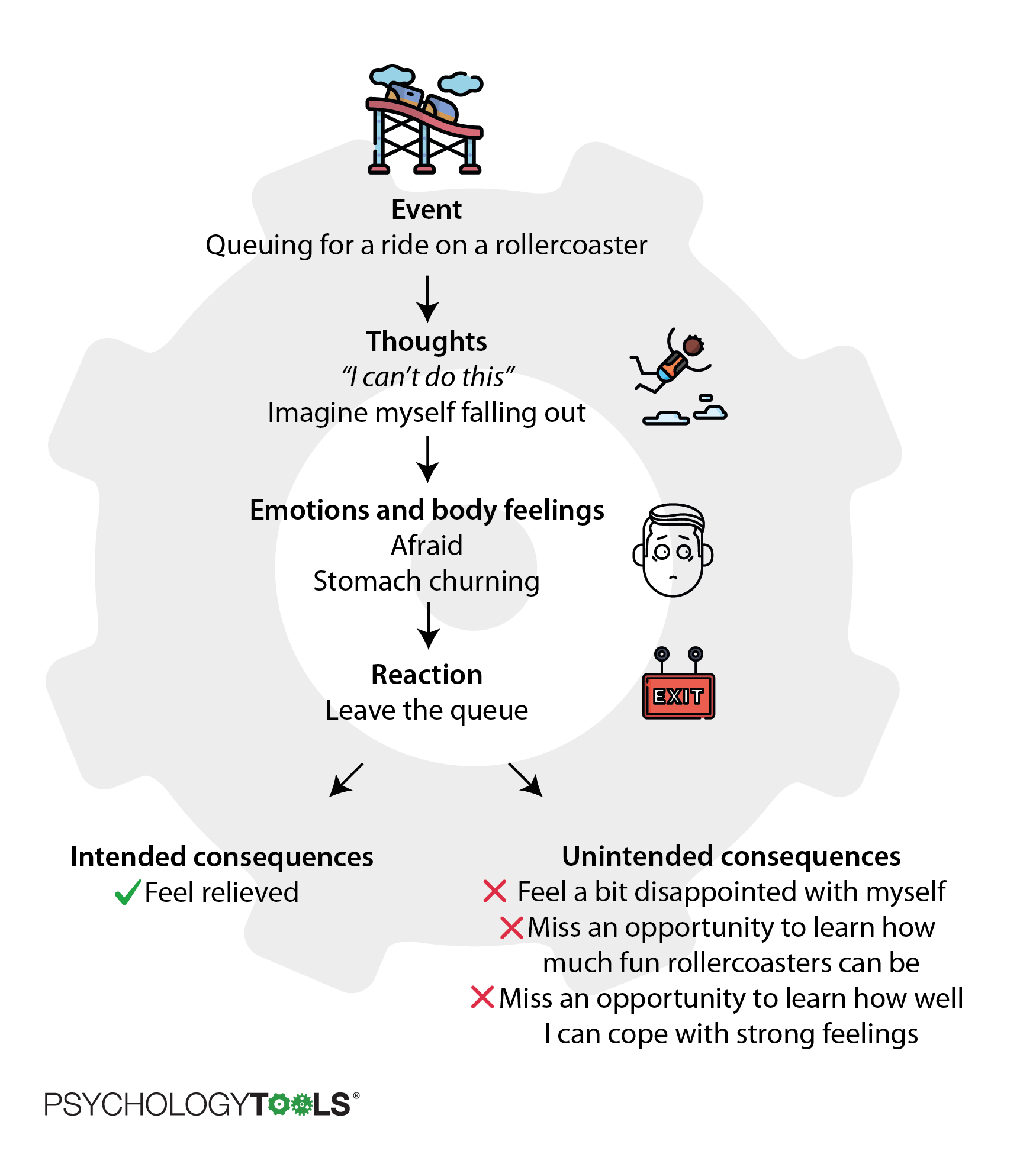
Figure iv.3: Our actions have intended and unintended consequences.
Focus on what is keeping a problem going
A burn down needs three things to start: heat, fuel, and oxygen. As long as those things are present the fire will go along on burning. We say that a burn's maintaining factors are heat, fuel, and oxygen. With this knowledge, firefighters tin choose which maintaining cistron to target. Depending on the type of fire they are faced with they may decide to:
- remove the oxygen by spraying the burn with; CO2; or
- remove the fuel bachelor to a forest fire by creating a 'fire break'; or
- spray on h2o to remove heat.
CBT examines problems in a similar fashion: the focus is on maintaining factors. Similar a fire information technology'due south not so of import to know what started information technology, but we do need to know what is keeping it going. Therapists who use CBT are trained to pay particular attention to any sequences that appear to get stuck in a loop or jammed (where an action feeds back to crusade more of the trouble).
Effigy iv.iv: CBT has a focus on what is keeping a problem stuck.
There are many dissimilar ways that man problems can be maintained. Some of the most common maintaining factors that can keep our problems stuck are illustrated below.
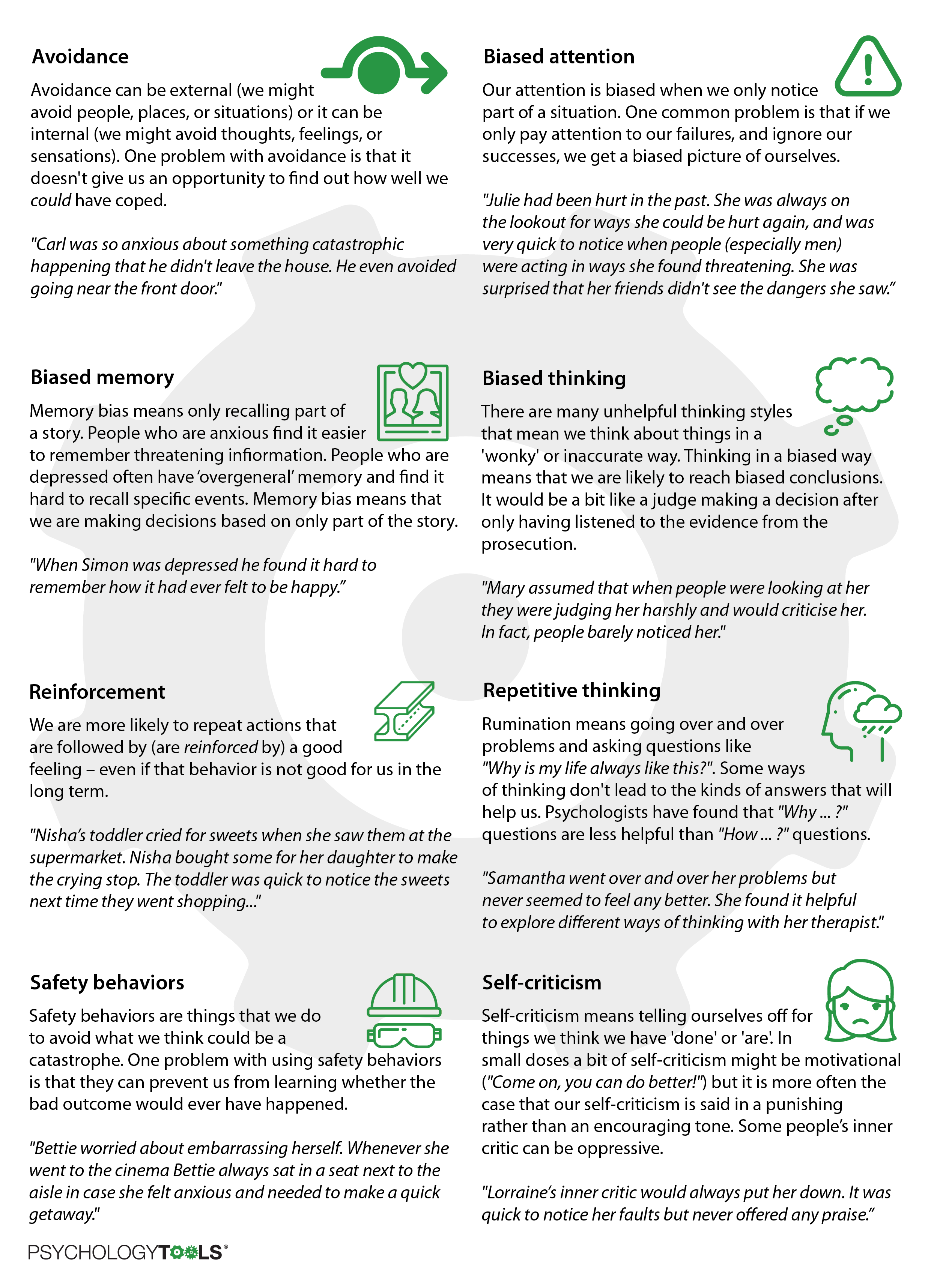
Figure four.5: Common maintaining factors for psychological problems.
How bug persist
Psychologists have institute that maintaining factors frequently join together in 'typical' ways to cause problems. In this section we will look at some common problems and explore the maintaining factors that proceed them going.
Feet
People who accept panic attacks frequently notice cryptic body sensations and assume that their presence means something terrible will happen. This mode of thinking results in strong emotional reactions followed by understandable attempts to cope. The selective attending, biased thinking, and avoidance are important maintaining factors in panic. These are the areas that CBT treatment for panic will focus on.
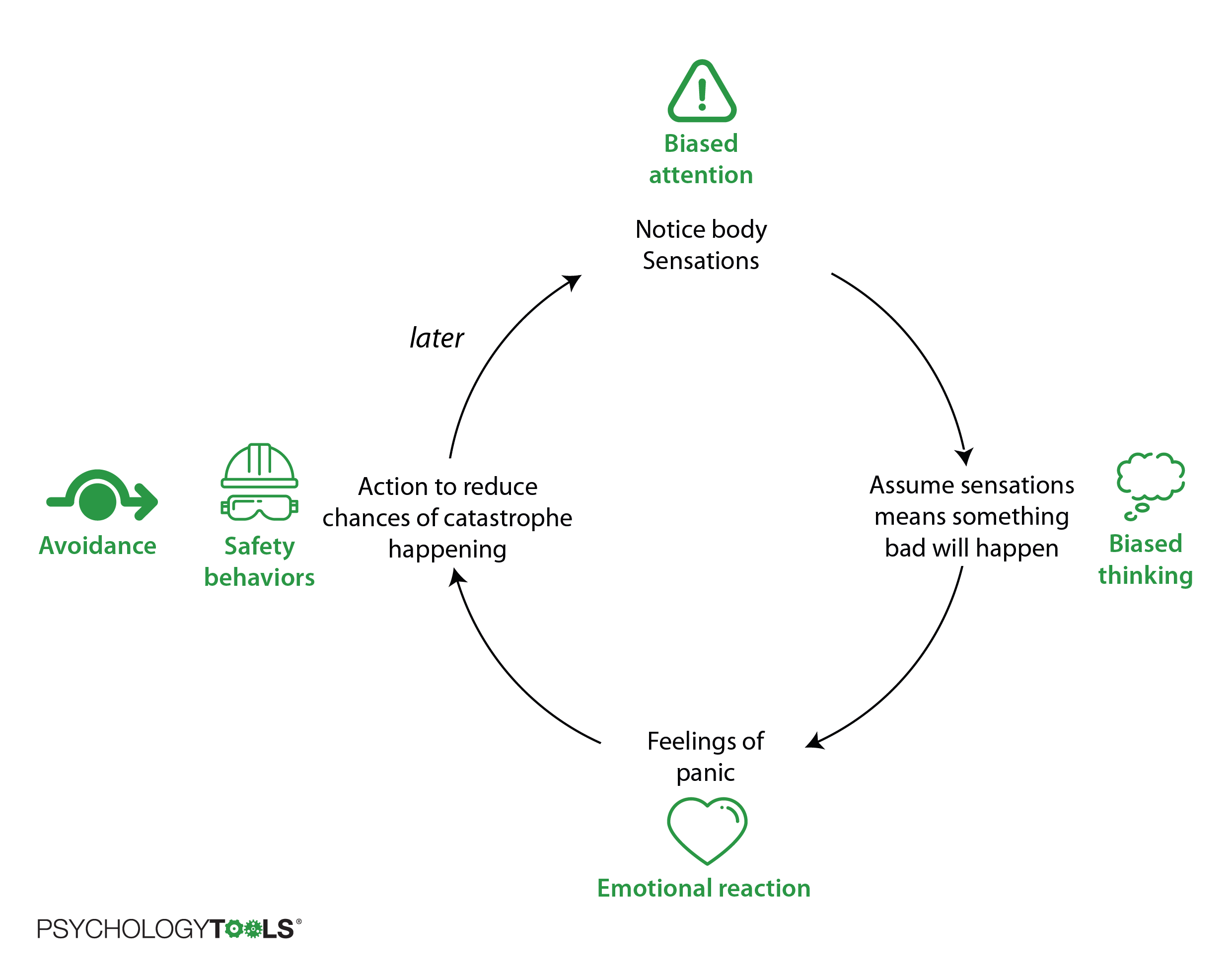
Figure 4.6: The bicycle of panic and the mechanisms that keep it going.
Depression
Similarly for depression, CBT researchers take found that people with low mood feel changes in thinking and behaviour and that these changes tin can continue the low going. The diagram below shows how 'depression way' can be maintained in some people.
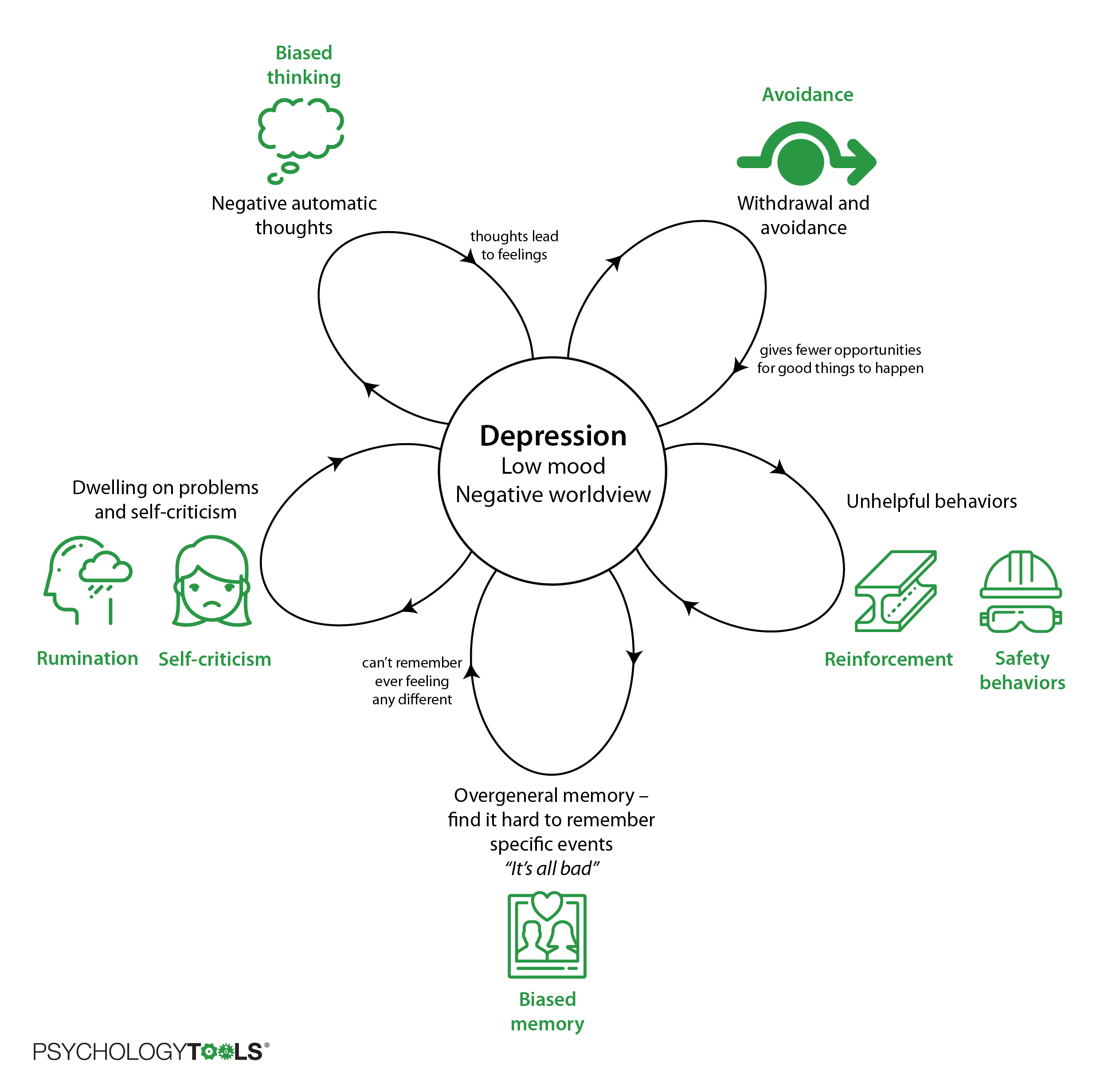
Figure four.7: One person's cycle of low with the mechanisms that keep information technology going.
Mixed problems
Many people struggle with more than i trouble at once and not everyone'southward problems fit neatly into models like those higher up. CBT is flexible though – using the aforementioned 'building blocks' information technology provides a framework for understanding problems then that and we tin create our ain models.
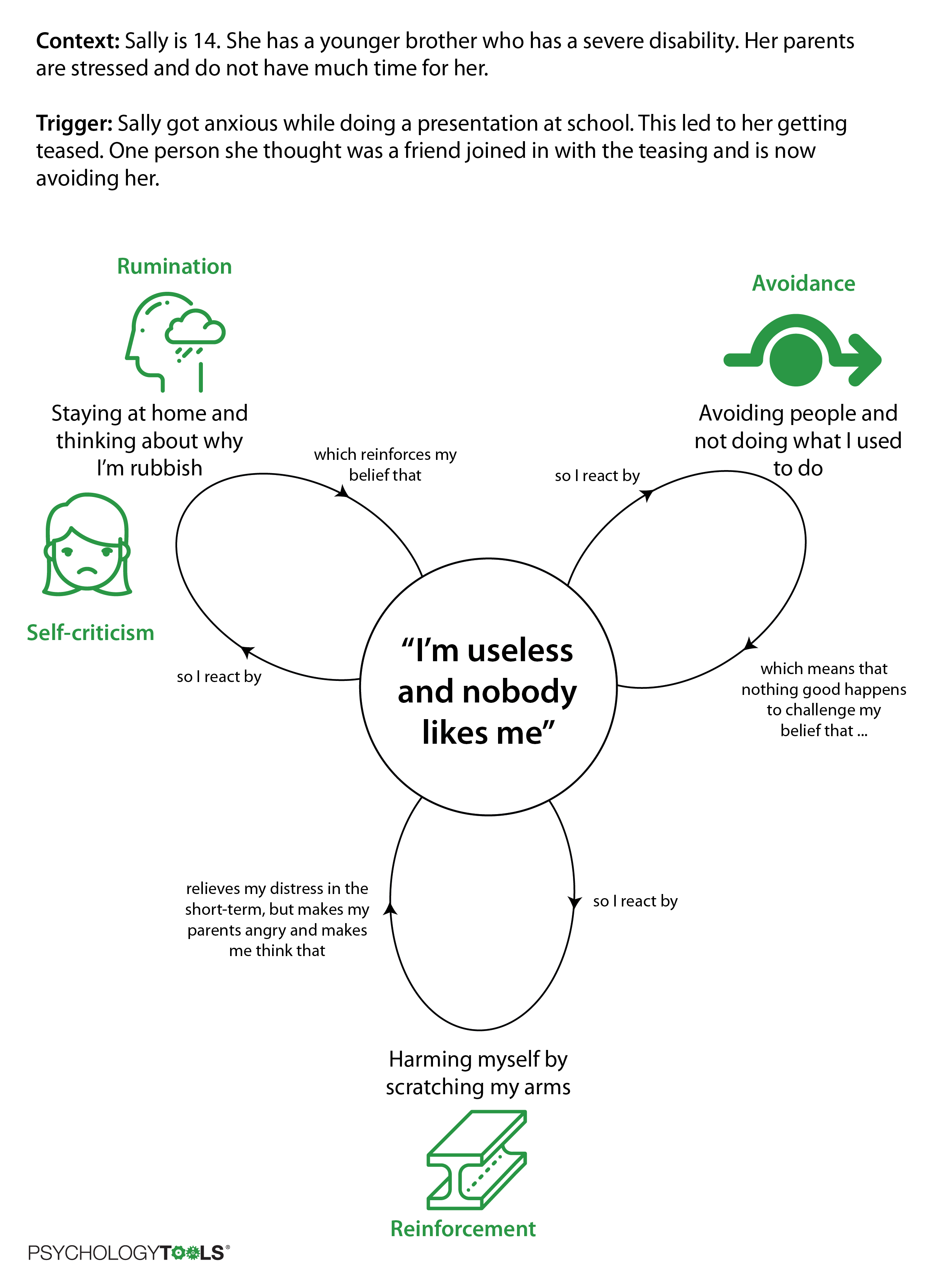
Effigy 4.8: The edifice blocks of CBT tin help us empathise a huge variety of problems.
When Sally came to therapy she was actually struggling. She and her therapist took the fourth dimension to properly understand how she was feeling, and identify the things that were maintaining her distress. Using this new understanding Sally, her therapist, and her parents came up with a plan to aid her feel better.
Making changes
One time we have an agreement of what is keeping a trouble going we need to take action in social club to go it 'unstuck'. If nosotros sympathise the maintaining factors nosotros are in a good position to think of some solutions that are probable to help.
CBT is non but a 'talking therapy'. Psychologists take plant that to be really helpful a therapy has to aid yous to brand changes in your life. Information technology is better to think of CBT every bit a 'doing therapy'.
The kinds of changes that CBT might assistance you to make volition vary from person to problem. Some common strategies for change are:
Facing your fears
Marcus had been barked at by a big dog when he was five years quondam. Now, over a year later, his mum had brought him to see a psychologist because his fear of dogs was making it difficult for him to visit his grandparents who had two dogs. Marcus' therapist helped him to overcome his fearfulness by gently exposing him to dog-related triggers. They started by drawing pictures of dogs, and then looking at photographs on the internet, playing with soft toys, and eventually meeting a gentle therapy dog. Marcus felt uncomfortable at times during this procedure, but with encouragement he was able to face his fears and overcome them. Six months afterwards and he was best friends with his grandparents' dogs.
Testing your assumptions
Ruddy had been scared of escalators ever since she had been a kid. She constitute it easy to imagine getting her article of clothing trapped, and getting seriously hurt. Her therapist encouraged her to make predictions most what would happen if she rode an escalator. Together they visited a local shopping centre and Ruby had a take chances to exam her assumptions. They began by watching other people ride the escalators and noting how many incidents occurred. Eventually Scarlet felt rubber enough to ride i herself, and was encouraged to experiment with past standing on different points of the step.
Thinking more accurately
Laura was very depressed when she started therapy. Her therapist encouraged her to record some of the thoughts she had when she felt at her worst. Laura's thoughts were extremely self-critical: she pounced on flaws in herself that she would not fifty-fifty notice in someone else. When Laura realised that she spoke to herself in ways that she would never dream of speaking to another person she began to practice being less self-critical, and her therapist trained her to notice her achievements as well as her stumbles.
Replacing unhelpful habits
Phil had suffered from panic attacks for a long time and some years ago i of his doctors had prescribed him a strong anti-feet medication. Phil had not taken the medication for over a year, but however carried it everywhere with him 'just in case'. He did everything he could to avoid the slightest symptoms of panic and when his therapist wondered aloud what would happen if he stopped carrying the medication with him Phil was initially reluctant. Nonetheless, every bit therapy progressed Phil learned that he could deliberately bring on the symptoms of panic without experiencing any of the catastrophes that he had been worrying well-nigh. Phil replaced his unhelpful addiction of avoidance with one of approach – and he found that he didn't need the 'crutch' of the medication once sensations of panic didn't experience so threatening.
Learning new skills
Joanne had always felt nervous when she was around other people and had a strategy of always putting their needs first because she assumed this would make her more than likeable. During therapy Joanne learned some skills to go more than assertive. Learning to assert herself gave her a new-institute conviction. To her surprise she found that rather than rejecting her, people in her life seemed to respect her more than.
Nosotros will explore the doing part of CBT more in later chapters. For the rest of this affiliate we're going to focus on agreement problems actually well.
The CBT model in do
For the rest of this chapter nosotros're going to expect at three different techniques that CBT therapists use to sympathize problems. Once nosotros have looked at some examples you volition have a chance to endeavor them yourself.
1. Cross-sectional model
Some things look complicated from the outside, but outset to make sense when we see the inner workings. A good way of understanding complicated systems is to employ a cross-sectional model. It'southward chosen that because it's like taking a snapshot (cross-section) of what is going on at one moment in time. Nosotros can use cross sections to sympathize how all sorts of things work, from volcanos to brains.
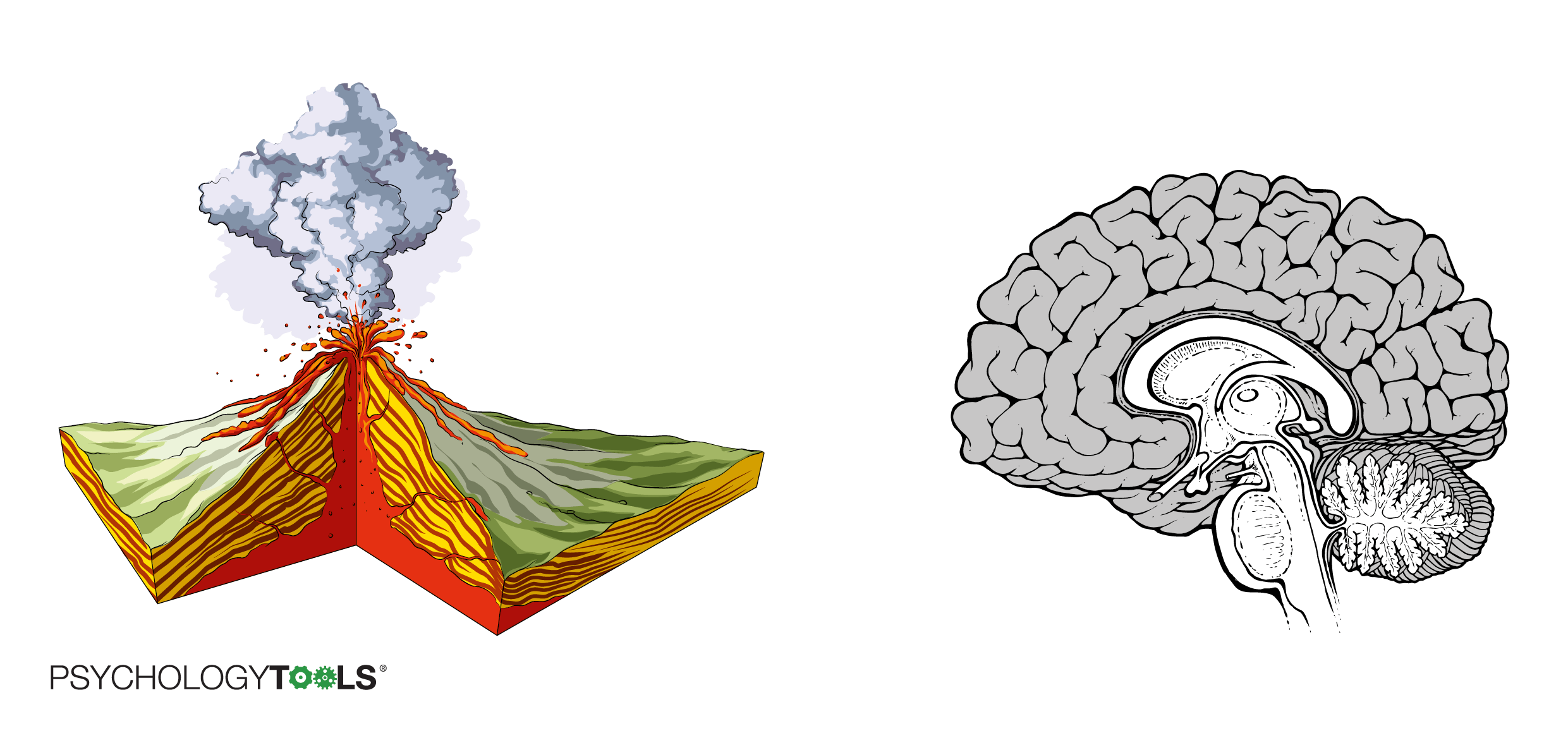
Figure four.ix: Cross sections help you lot to empathise the inner workings of complex systems.
A CBT cantankerous-section examines a situation for a short period of time and looks at some of the typical CBT elements: triggers, thoughts, feelings, and reactions. The CBT cross-exclusive model is slap-up for:
- understanding the connections between our thoughts, feelings, and behavior; and
- gathering data about problems as they occur so that we can look for patterns
Carla came to therapy because she was feeling very agape nearly days. Her therapist explored some specific instances of fear with her, and drew elements of their conversation equally a cross-section.
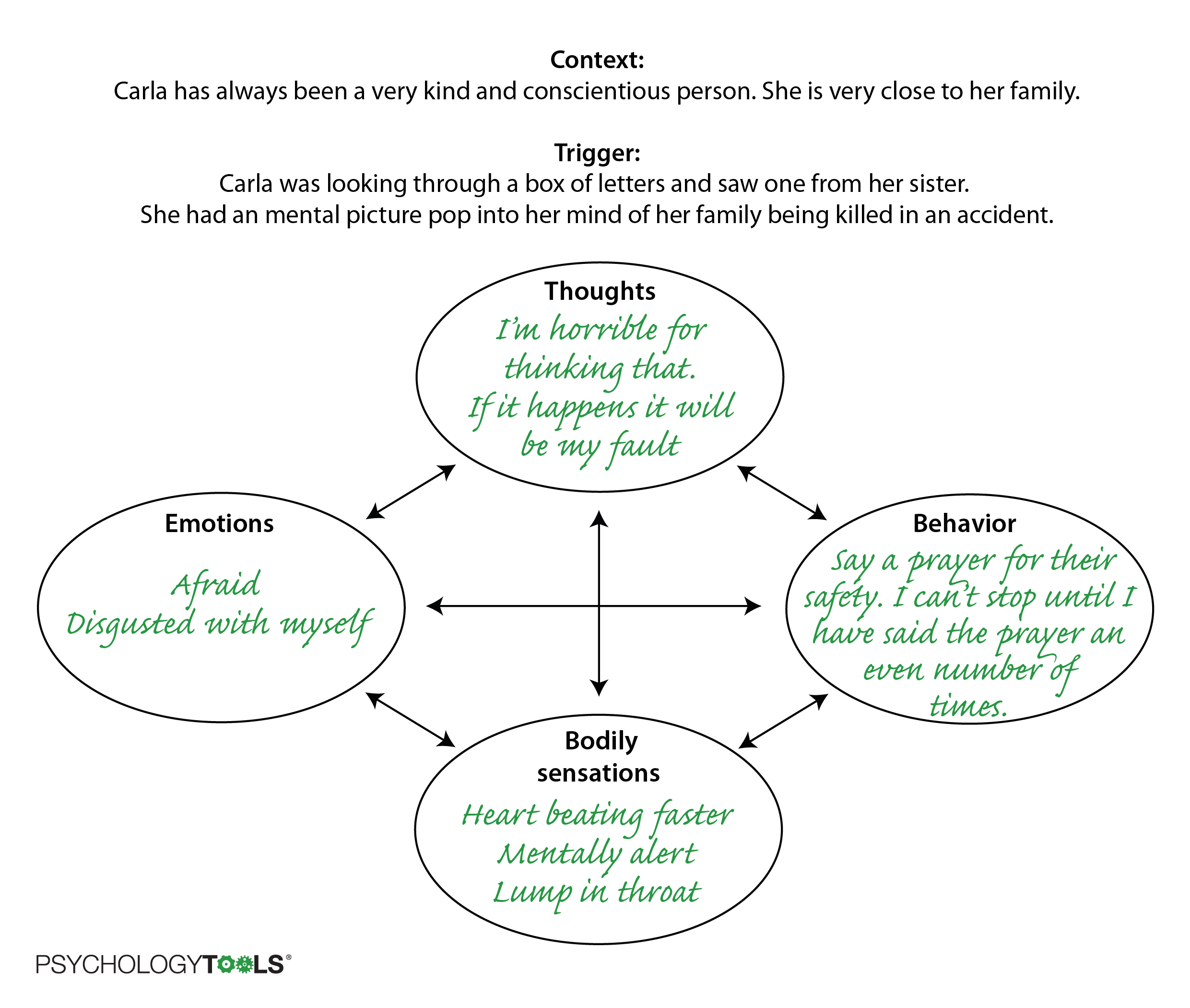
Figure 4.x: A cross-exclusive model of one of Carla'southward anxious moments.
Using the cross-sectional model helped Carla to notice some of the scary thoughts she had been having, and some of the 'urges' she experienced in response to them. When her therapist asked her to continue a record for a week she began to notice some patterns about when the thoughts appeared, and the kinds of predictions that her mind would make. This helped Carla and her therapist to brand some plans virtually the handling that would exist most helpful for her.
2. ABC model
Another helpful way of dismantling a problem event is to use an A-B-C nautical chart. Instead of looking at 1 moment in fourth dimension an A-B-C nautical chart helps united states of america to focus on what happened before and afterwards an (upsetting) event. This can be useful for agreement:
- which things happen in what order; and
- why a problem keeps coming back or has got worse over time.
A stands for Antecendents. You can think of these every bit 'triggers', the 'affair that happened earlier', or 'what set the problem off '
B stands for Behaviors. This is how yous reacted. This can include emotional reactions, observable behaviors (e.g. "I ran abroad"), or covert behaviors (e.g. "I told myself off for being then stupid")
C stands for consequences. What happened as a outcome of my behavior? How did I experience? Did it affect how other people react towards me? It is often helpful to remember separately near short-term and long-term consequences.
Seema has been feeling extremely down. Her family doctor referred her to a psychologist when she bankrupt down in tears during one of their consultations. Seema's psychologist used an A-B-C nautical chart to explore what was happening around some of Seema'due south self-reported lowest moments.
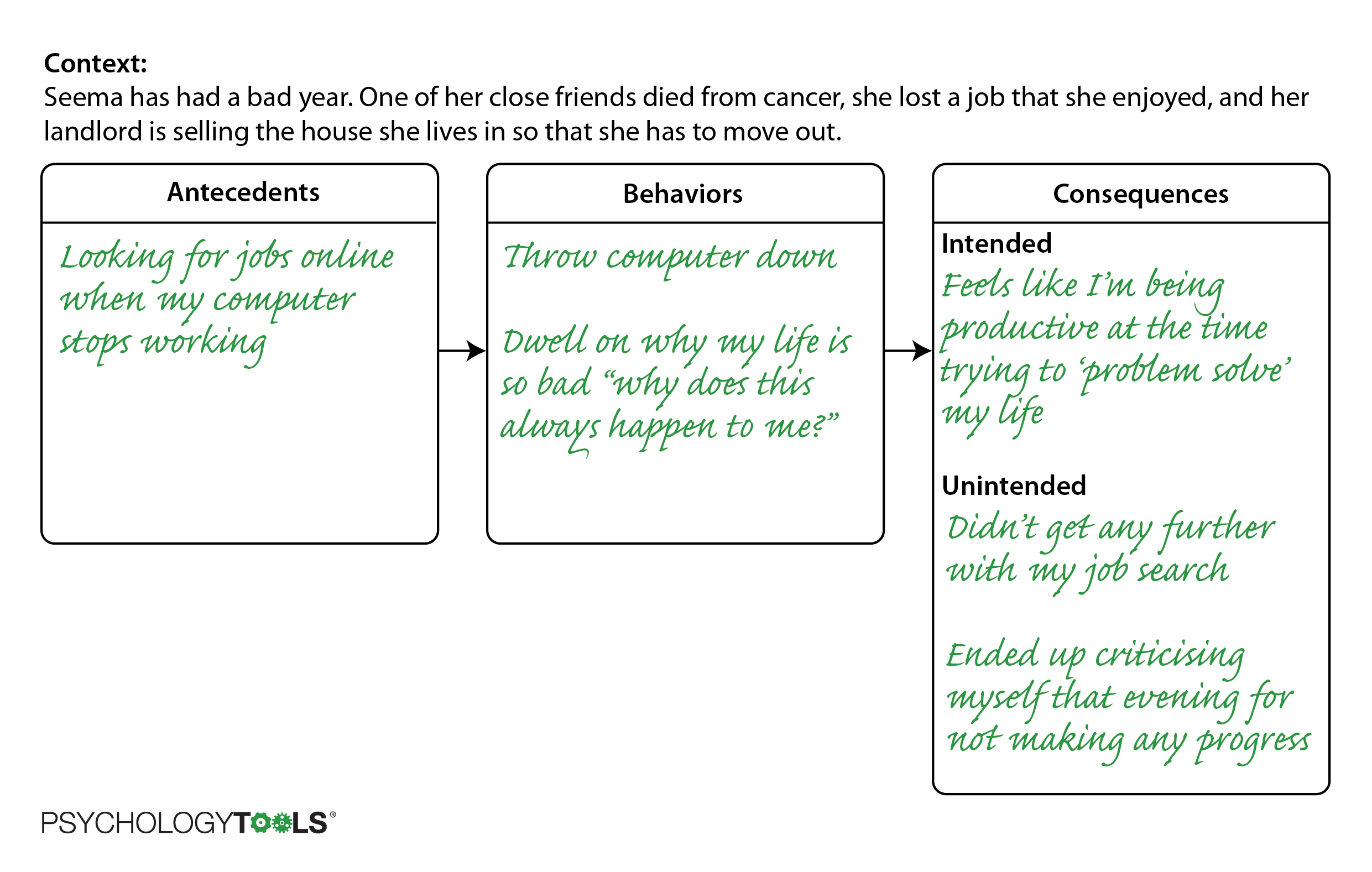
Figure 4.11: An A-B-C chart of one of Seema's moments of frustration.
This A-B-C chart helped Seema and her therapist to sympathize that she used rumination as a way of trying to solve her bug. Information technology made her feel productive in the curt term, like she was actively trying to solve her problems, but had the unintended outcome of exposing her to self-criticism. It was making her experience worse!
3. Sequence model
Sometimes it tin be helpful to understand a problem equally a sequence of events. This can exist helpful when:
- a sequence is more complicated, or too complicated to fit into the previous models; or
- when searching for points where the 'chain can exist cleaved' (moments where we could take taken a different action that would have lessened our pain).
Sarah was brought to therapy past her parents because she had "not been herself" for some months. They felt that she had been angry and 'snappy', and Sarah said that she didn't feel skillful enough and was often bawling. Together Sarah and her therapist explored some of the recent times that she had felt angry or frustrated, and drew some sequences on a piece of paper.
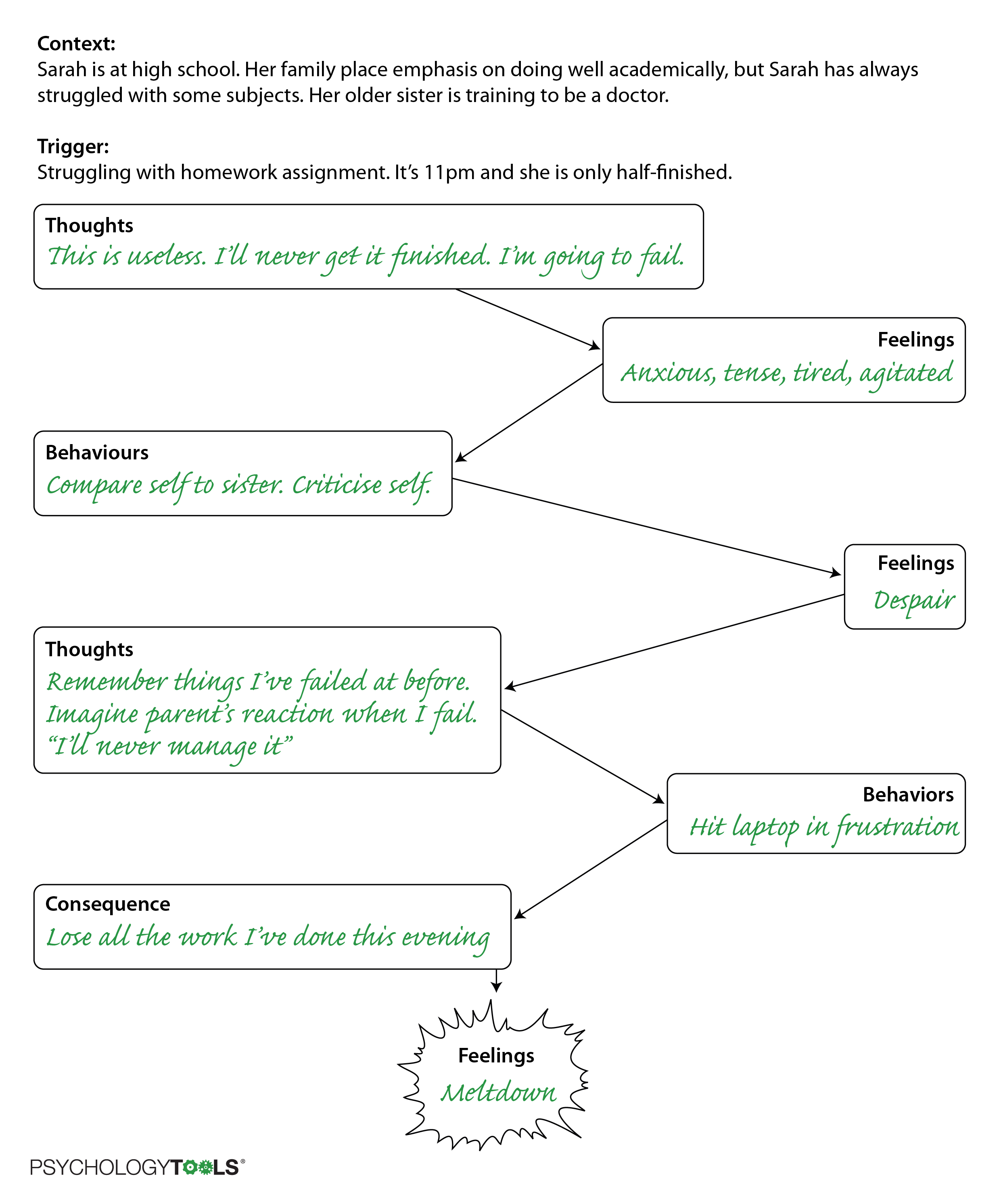
Effigy 4.12: A sequence that Sarah and her therapist identified which ended in a 'meltdown'.
By monitoring sequences similar these it became credible that Sarah often compared herself unfavorably to other people. She and her therapist experimented past having Sarah consciously choose to make dissimilar kinds of comparisons and noticing the effects. With Sarah'south permission she also spoke separately to Sarah's parents about where Sarah might have developed her ideas about self-worth existence tied to academic perormance. Sarah and her parents made other changes that allowed Sarah to pursue some of her creative interests.
Source: https://www.psychologytools.com/self-help/putting-it-all-together/
0 Response to "If It Got the Chance to Do the Same Thing Again and if It Thought It Could Escape the Consequences"
Post a Comment